Frequently searched keywords:
Frequently searched keywords:


Haber tarihi: 28/04/2026
Last update date: 28.04.2026
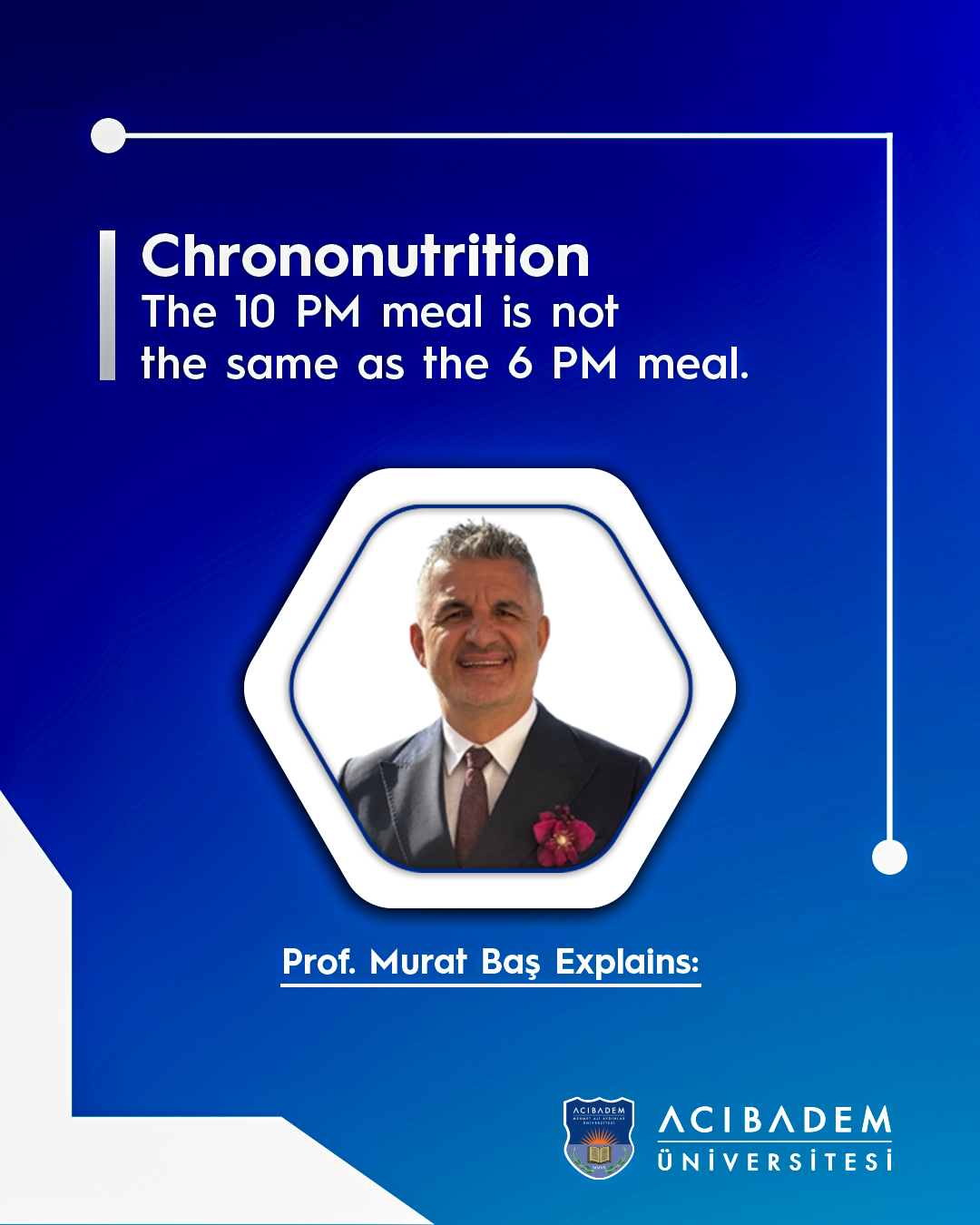
Chrononutrition: Eating at the Right Time
When we think of healthy eating, the question "what do we eat" usually comes to mind first. Yet science shows that "when we eat" is just as decisive.
Known as "chrononutrition," this approach highlights the importance of eating in alignment with the body's biological clock. Research shows that the same meal consumed at different times of day triggers different metabolic responses, and that meals eaten late at night tend to have more adverse effects.
Prof. Murat Baş, Dean of the Faculty of Health Sciences and Head of the Department of Nutrition and Dietetics at Acıbadem University, states: "Eating in harmony with the body's biological rhythm is one of the fundamental determinants of health. Meals consumed late at night catch the body in its resting phase, creating a metabolic burden."
The Same Meal, a Different Effect at a Different Hour
The scientific evidence paints a clear picture: a meal consumed at 10 PM is associated with a higher glycemic response, lower fat oxidation, and slower triglyceride clearance compared to the same meal consumed at 6 PM.
Prof. Murat Baş explains: "When the same meal is eaten late at night, the body manages blood sugar and fat less effectively blood sugar rises more and less fat is burned."
In the evening hours, insulin sensitivity declines, glucose tolerance decreases, and melatonin levels rise. This causes calories to be stored as fat more readily. Research indicates that the habit of eating late increases the risk of type 2 diabetes, obesity, and metabolic syndrome.
What Should You Eat in the Evening?
Experts recommend vegetable-forward, protein-balanced meals that are low in sugar and refined carbohydrates for the evening. Fiber-rich vegetables, legumes, fish, and yogurt all support metabolic balance.
Prof. Murat Baş notes: "Scientific studies show that tryptophan-rich foods such as yogurt, milk, turkey, chicken, eggs, banana, and oats along with magnesium-rich foods like spinach, chard, almonds, walnuts, cashews, and legumes play an important role in both improving sleep quality and supporting hormonal balance."
In the evening hours, avoiding sugary and refined carbohydrates, heavy meals rich in saturated fat, caffeine, and alcohol is important for keeping the metabolism in balance.
"Healthy eating is not only about what we eat, but also about when we eat. Aligning with the body's biological rhythm is the foundation of metabolic health."
25 September 2026
Faculty of Health Sciences, Nursing, Nursing, Nursing (English)
06 July 2026
Faculty of Health Sciences, Nursing, Nursing, Nursing (English), Nursing PhD
12 June 2026
Faculty of Health Sciences, Nursing, Nursing, Nursing (English), Nursing PhD