


Cemaliye Akyerli Boylu received her undergraduate degree from Hacettepe University, Faculty of Science, Department of Biology in 1996. Then, she completed her master's degree in 1998 and her doctorate in 2004 at İhsan Doğramacı Bilkent University, Faculty of Science, Department of Molecular Biology and Genetics. During her PhD studies, she worked as a researcher at the Cleveland Clinic, Lerner Research Institute, Department of Cancer Biology with a NATO A2 scholarship. She has been working at Acıbadem University, School of Medicine, Department of Medical Biology since 2009. Her main research areas can be summarized as cancer genetics. Her recent studies are investigating the effects of nuclear genome and mtDNA variations as molecular markers on disease biology in Gliomas and Breast Cancer.
Recent Publications
Yüksel Kılıçturgay Şirin, Özduman Koray, Yılmaz Engin, Pamir Mustafa Necmettin, Akyerli Boylu Cemaliye (2021) “Analysis of mitochondrial DNA control region D-loop in gliomas: result of 52 patients” Turkish Neurosurgery 31(3): 368-372 http://dx.doi.org/10.5137/1019-5149.jtn.29805-202
Ülgen Ege, Can Özge, Bilguvar Kaya, Akyerli Boylu Cemaliye, Yüksel Şirin, Erşen Danyeli Ayça, Sezerman Osman Uğur, Yakıcıer Mustafa Cengiz, Pamir Mustafa Necmettin, Özduman Koray (2021) “Sequential filtering for clinically relevant variants as a method for clinical interpretation of whole exome sequencing findings in glioma” BMC Medical Genomics 14:54 doi.org/10.1186/s12920-021-00904-3
Ülgen Ege, Karacan Sıla, Gerlevik Umut, Can Özge, Bilguvar Kaya, Oktay Yavuz, Akyerli Boylu Cemaliye, Yüksel Şirin, Erşen Danyeli Ayça, Tihan Tarik, Sezerman Osman Uğur, Yakıcıer Mustafa Cengiz, Pamir Mustafa Necmettin, Özduman Koray (2020) “Mutations and Copy Number Alterations in IDH Wild-Type Glioblastomas Are Shaped by Different Oncogenic Mechanisms” Biomedicines 8:574 doi.org/10.3390/biomedicines8120574
Akyerli Boylu Cemaliye, Yüksel Şirin, Yakıcıer Mustafa Cengiz (2020) "Lack of hotspot mutations other than TP53 R249S in aflatoxin B1 associated hepatocellular carcinoma " Turkish Journal of Biochemistry 45 (4): 451-453 https://www.degruyterbrill.com/document/doi/10.1515/tjb-2020-0003/html
S. Dalva-Aydemir, C.B. Akyerli, Ş.K. Yüksel, H. Keskin, M.C. Yakıcıer (2019) "Toward In Vitro Epigenetic Drug Design for Thyroid Cancer: The Promise of PF-03814735, an Aurora Kinase Inhibitor" OMICS. 2019 Oct;23(10):486-495. doi: 10.1089/omi.2019.0050.
E. Ülgen, Ö. Can, K. Bilguvar, Y. Oktay, C.B. Akyerli, A.E. Danyeli, M.C. Yakıcıer, O.U. Sezerman, M.N. Pamir, K. Özduman (2019) "Whole exome sequencing-based analysis to identify DNA damage repair deficiency as a major contributor to gliomagenesis in adult diffuse gliomas" Journal of Neurosurgery 2019 Apr 5:1-12. doi: 10.3171/2019.1.JNS182938.
Şirin Yüksel, Cemaliye Boylu Akyerli, M. Cengiz Yakıcıer. (2017) “Angiogenesis, Invasion, and Metastasis Characteristics of Hepatocellular Carcinoma” “J Gastrointest Cancer” 48: 256–259
Cemaliye B. Akyerli, Şirin Yüksel, Özge Can, E. Zeynep Erson-Omay, Yavuz Oktay, Erdal Coşgun, Ege Ülgen, Yiğit Erdemgil, Aydın Sav, Andreas von Deimling, Murat Günel, M. Cengiz Yakıcıer, M. Necmettin Pamir, Koray Özduman. (2017) “Use of Telomerase Promoter Mutations to Mark Specific Molecular Subsets with Reciprocal Clinical Behavior in IDH Mutant and IDH Wild-Type Diffuse Gliomas” “Journal of Neurosurgery” 16973: 1-13
Y. Oktay, E. Ulgen, O. Can, C. B. Akyerli, S. Yuksel, Y. Erdemgil, I. M. Durasi, O. I. Henegariu, E. P. Nanni, N. Selevsek, J. Grossmann, E. Z. Erson-Omay, H. W. Bai, M. Gupta, W. Lee, S. Turcan, A. Ozpinar, J. T. Huse, M. A. Sav, A. Flanagan, M. Gunel, O. U. Sezerman, M. C. Yakicier, M. N. Pamir, K. Ozduman. (2016) “IDH-Mutant Glioma Specific Association of Rs55705857 Located at 8q24.21 Involves Myc Deregulation” “Scientific Reports” 6: 1-14
Eda Tahir Turanlı is a Professor at Acıbadem University, Department of Molecular Biology and Genetics (MBG), Istanbul, Turkey. She received her BSc from Nottingham University, Queen's Medical Hospital, Department of Genetics (1994), and her MSc from London University, Imperial College of Science and Technology, St Mary's Medical School (1995). She received her doctorate degree from Marmara University, Institute of Health Sciences, Department of Medical Biology and Genetics in 2000. Tahir Turanlı's research interests include genetic and epigenetic mechanisms of rare and complex inherited diseases, especially autoinflammatory and neurodegenerative diseases.
Active Research Projects: Novel susceptibility genes identification in familial Multiple Sclerosis and in autoinflammatory disease; Developing and investigating the functionality of the genetic variants in cell culture models
Related Publications :
1. Akalu Y, Taft J, Berger T, Rostásy K, Dafsari HS, …, Tahir Turanlı E., …, Bogunovic D.
Human TBK1 Deficiency: An Expanded Spectrum from Autoinflammation to Viral Encephalitis. Journal of Human Immunity. 2026;2(2):e20250245. (SCI-Expanded)
2. Guven Tasbicen G, Tufan A, Savsar B, Bulbul A, Tonbul Z, …, Tahir Turanlı E.
Molecular Consequences of CCN6 Variants Encoding WISP3 in Progressive Pseudorheumatoid Dysplasia. International Journal of Molecular Sciences. 2025;26(18):8838. (SCI-Expanded)
3. Büyükgöl F, Gürdamar B, Aluçlu MU, Beckmann Y, Bilguvar K, …, Siva A, Tahir Turanlı E.
Exome Sequencing Reveals Low-Frequency and Rare Variant Contributions to Multiple Sclerosis Susceptibility in Turkish Families. Scientific Reports. 2025;15(1):11682. (SCI-Expanded)
4. Özkılınç Önen M, Everest E, Demirci T, Köprülü Şen P, Kızıltepe Kısakesen E, …, Tahir Turanlı E.
HLA-B Gene Methylation and Expression in Behçet's Syndrome: A Potential Role of Epigenetics in the Pathogenesis. Clinical and Experimental Rheumatology. 2024. (SCI-Expanded)
5. Özkılınç Önen M, Onat Uİ, Uğurlu S, Timuçin AC, Öz Arslan D, …, Tahir Turanlı E.
Detection of a Rare Variant in PSTPIP1 Through Three Generations in a Family with an Initial Diagnosis of FMF/MKD-Overlapping Phenotype. Rheumatology. 2023;62(9):3188–3196. (SCI-Expanded)
6. Everest E, Uygunoğlu U, Tütüncü M, Bülbül AA, Onat Uİ, …, Tahir Turanlı E.
Prospective Outcome Analysis of Multiple Sclerosis Cases Reveals Candidate Prognostic Cerebrospinal Fluid Markers. PLoS ONE. 2023;18(6). (SCI-Expanded)
7. Everest E, Ahangari M, Uygunoğlu U, Tütüncü M, Bülbül A, …, Tahir Turanlı E.
Investigating the Role of Common and Rare Variants in Multiplex Multiple Sclerosis Families Reveals an Increased Burden of Common Risk Variation. Scientific Reports. 2022;12(1):16984. (SCI-Expanded)
8. Ahangari M, Everest E, Nguyen T, Verrelli BC, Webb BT, …, Tahir Turanlı E., Riley BP.
Genome-Wide Analysis of Schizophrenia and Multiple Sclerosis Identifies Shared Genomic Loci with Mixed Direction of Effects. Brain, Behavior, and Immunity. 2022;104:183–190. (SCI-Expanded)
9. Omarjee O, Mathieu AL, Quiniou G, Moreews M, Ainouze M, …, Tahir Turanlı E., …, Belot A.LACC1 Deficiency Links Juvenile Arthritis with Autophagy and Metabolism in Macrophages. Journal of Experimental Medicine. 2021;218(3):e20201006. (SCI-Expanded)
Dr. Kaya Bilgüvar has been conducting research in the field of human genetics for 25 years. In the summer of 2021, after spending nearly 20 years in the United States, he returned to Türkiye and assumed roles at Acıbadem Mehmet Ali Aydınlar University. Here, he serves within the School of Medicine's Department of Medical Genetics, the Institute of Health Sciences' Departments of Genome Studies and Translational Medicine, the Research Institute for Rare Diseases and Orphan Drugs (ACURARE), and the ACU Biobank.
Concurrently, Dr. Bilgüvar continues his research and educational activities as an adjunct associate professor within the Departments of Neurosurgery and Genetics, the Yale Center for Genome Analysis, and the Neurogenetics and Brain Tumor Research Programs at Yale University. His primary research interests include identifying the genetic causes of developmental diseases affecting the structure and function of the human nervous system. His work focuses on elucidating underlying biological dysregulations using two- and three-dimensional neural structures derived from patient somatic cells, genome editing, and multi-omic applications, thereby facilitating the development of advanced molecular and cellular therapy medicinal products. Recently, he has focused heavily on cerebral cortex anomalies, schizophrenia, bipolar disorder, early-onset neurodegenerative syndromes, and migraine research.
Furthermore, he utilizes his expertise in multi-omic applications to develop methods for the diagnosis and longitudinal monitoring of brain tumors. In addition to his research, Dr. Bilgüvar served sequentially as the associate director and director of the Yale Center for Genome Analysis between 2013 and 2021. During this tenure, he contributed to numerous large-scale genetic research projects and diagnostic clinical applications by implementing and developing next-generation sequencing methods.
Due to his keen interest in the continuously evolving ethical and social principles and dimensions of genetics, genomics, developmental nervous system diseases, and stem cell and organoid research, he serves on university human and medical research ethics committees, as well as in consortia such as the "Centers for Mendelian Genomics" established by the United States National Institutes of Health. His adoption of patient-derived, induced stem cell-based organoid research is significantly driven by his preference to avoid animal experimentation, alongside the inherent advantages of isogenic models where all genetic variables are controlled.
Dr. Kaya Bilgüvar attaches great importance to adopting and implementing the principles of sustainability, equality, justice, impartiality, and inclusivity in research and educational environments. He firmly believes that collaboration is a more productive, creative, and powerful action than competition.
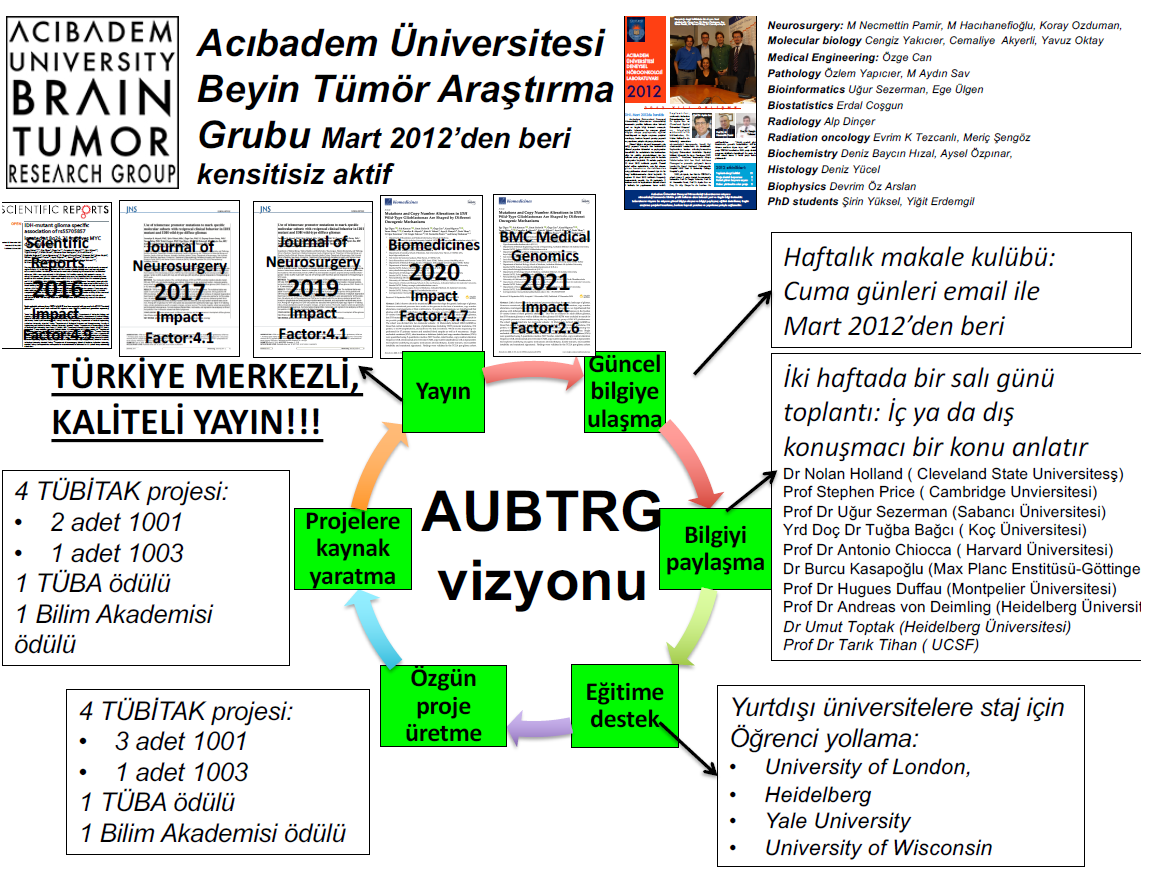
Dr. Koray Özduman, özellikle kanser biyolojisi ve beyin tümörleri ile ilgilenen bir beyin cerrahıdır. Mart 2012’den beri Üniversitemizin klinik ve temel bilim dallarından meslektaşlarla birlikte kurmuş olduğu Acıbadem Beyin Tümör Araştırma Grubunun (AUBTRG) yürütücülüğünü devam ettirmektedir.
AUBTRG bir ilgi grubudur ve misyonu “ Beyin tümörleri konusunda, Türkiye merkezli, kaliteli, uluslararası yayın üretmektir.” Bu amaca ulaşmak için 6 komponentli bir vizyon belirlenmiştir. Bu 6 güncel bilgiye ulaşmak, bilgiyi grup içinde paylaşmak, eğitimi desteklemek, özgün proje üretmek, projelere kaynak yaratmak ve yayın yapmaktır. AUBTRG’nin nöroşirürji, patoloji, tıp mühendisliği, biyoinformatik, biyokimya, histoloji, biyofizik, radyoloji, radyasyon onkolojisi dallarından akademisyen üyeleri, doktora, lisans, tıp fakültesi ve tıpta uzmanlık öğrencilerinden oluşan, çok iyi eğitimli, modern yöntemlere hakim ve motive üyeleri vardır. Yale, Heidelberg, UCSF, Oxford, University of London’da yerleşik beyin tümör araştırmacıları ile yakın iletişimi vardır.
Güncel bilgiye ulaşmak için 2012’en beri cuma günleri email ile dağıtılan bir haftalık makale paylaşımımız, iki haftada bir Salı akşamüstü Üniversite’de olan makale kulüplerimiz devam etmektedir. Bu toplantıların artık karakteristik olmuş bir sandvic tipi bile vardır. Toplantılara, beyin tümörleri konusunda en modern çalışmaları yapan Antonio Chioca, Andreas von Demling, Tarık Tihan, Hugues Duffau, Stephen Price, Nolan Holland, Uğur Sezerman, Tuğba Bağcı, Umut Toprak gibi araştırıcılar konuk konuşmacı olarak katılmışlardır. Sabancı Üniversitesinden Prof. Uğur Sezerman sadece grubumuzda daha aktif olarak rol alabilmek için Üniversitemize katılmış ve Üniversitemizin en başarılı doktora öğrencilerini yetiştirmiştir. Prof. Sezerman’ın rüzgarıyla hızlanan tümör moleküler biyoloji çalışmaları duyan Doç. Dr. Ayça Erşen Danyeli de Üniversitemize katılmış ve dünya çapında bir patoloğun da gruba eklenmesi ile, klinik sorunları bilimsel yöntemlerle anlamaya çalışan grubumuz daha da güçlenmiştir. Son olarak da Yale Üniversitesinde yeni nesil dizileme teknolojileri ve beyin organoid kültürleri konusunda isim yapmış olan Dr. Kaya Bilguvar da, sadece gubumuzun üyesi olabilmek için, Üniversitemize katılmıştır.
Eğitimi desteklemek için lisans ve doktora öğrencilerimiz Yale Üniversitesi, Heidelberg Üniversitesi, Oxford Üniversitesi, University of London ve University of Wisconsin’e yurtdışı stajlar için yollanmıştır ve bunun için kaynak yaratılmıştır.
Araştırmaya kaynak yaratmak için şimdiye kadar 4 tübitak projesi, 1 TÜBA ödülü ve 1 Bilim Akademisi ödülü alınmıştır. 2012’den beri çalışmalarımızın odak noktası olan “glial beyin tümörlerinin oluşum mekanizmaları” konusunda 5 yüksek impaktlı bilimsel makale yayını yapılmıştır. Aynı çalışmalar uluslararası kongrelerde büyük bir prestijle sunulmuş ve birden çok sunum ödülü alınmıştır. Glial tümörlerin sınıflanması ve oluşum mekanizmalarının anlalşılması konusunda hep dünyadaki en ön saflarda yer alınmış ve alana anlamlı katkılarımız olmuştur. 10. yıldan itibaren ikinci bir araştırma odağı olarak “meningiom tümörlerinin oluşum mekanizmaları” üzerine de çalışmalar başlamış ve bu konuda iki Tübitak projesi alınmıştır.
2022’de AUBTRG 10. Yılını kutlamış, ilk günkü heyecanına tecrübeyi ekleyerek yoluna devam etmektedir.
Prof. Dr. Özden Hatırnaz Ng, PhD graduated from the Department of Biology, Faculty of Science at Istanbul University in 2002. She completed her MSc (2002–2005) and PhD (2005–2011 at the Department of Genetics at the Aziz Sancar Institute of Experimental Medicine, Istanbul University. She conducted her doctoral studies, at the Department of Immunology at Erasmus Medical Center (EMC) and at the Department of Molecular Stem Cell Biology at Leiden University Medical Center (LUMC) under the supervision of Prof. Frank JT Staal. Her main research focuses on childhood cancers, genetic predisposition to cancers, rare and undiagnosed diseases, and advanced therapeutic approaches.
She chaired one of the first and most comprehensive rare disease research project “ISTisNA- Istanbul Undiagnosed and Rare Diseases Solution Platform” which was funded by the Istanbul Development Agency (www.istisna.org). The project aimed to integrate clinical data, biobanking, and advanced analytics in rare and undiagnosed diseases. Since March 2024, she has been serving as Vice Dean responsible for Research and Academic Affairs. She also serves as the Vice Director of ACURARE – the Rare Diseases and Orphan Drugs Research and Application Center at Acıbadem University (https://www.acibadem.edu.tr/merkezler/rare).
In addition, she is a member of the Advisory Board of the Health Institutes of Türkiye (TÜSEB), Biotechnology Institute, Cellular and Gene Therapies Scientific Committee. She has coordinated numerous national projects funded by The Scientific and Technological Research Council of Türkiye-TÜBİTAK. She also conducted partnerships in international research projects including European Joint Project in Rare Diseases-EJPRD and The European Partnership for Rare Diseases-ERDERA. In addition to her research activities, she is taking part in the medical education and graduate education. Her primary motivation is to translate scientific discoveries into clinical impact through international collaborations, innovative research initiatives, and the mentorship of future physician-scientists and researchers.
Özkan Özdemir graduated from the Department of Biology at Marmara University and completed his MSc in Immunology and PhD in Genetics at the Aziz Sancar Institute of Experimental Medicine, Istanbul University. He subsequently conducted postdoctoral research at the University of Cologne. He is currently an Assistant Professor in the Department of Medical Biology at Acıbadem Mehmet Ali Aydınlar University School of Medicine.
His academic research focuses on the genetics of epilepsy, the molecular basis of rare and undiagnosed diseases, neurodevelopmental and neuromuscular disorders, rapid genomic diagnosis, and the clinical interpretation of genomic variants. He has contributed to more than 30 internationally indexed articles, with studies published in journals including Nature Genetics, Genetics in Medicine, Acta Neuropathologica, Neurology, and Clinical Genetics. His research has contributed to the identification of novel disease-associated genes and variants, a better understanding of genotype–phenotype relationships, and the clinical implementation of next-generation sequencing technologies.
In the research projects he leads, he investigates the molecular mechanisms of epilepsy, spatiotemporal gene expression, genomic analysis of rare diseases, reanalysis of previously unsolved cases, and the transformation of high-throughput biological data into clinically meaningful knowledge. His current research also covers long-read sequencing, real-time genomic analysis, multiomic data integration, genomic variant prioritization, federated genomic data infrastructures, and artificial intelligence–supported clinical decision systems.
In addition to graduate education, he contributes to the activities of the ACU Biobank and the Research Center for Rare Diseases and Orphan Drugs. He supports the active participation of students in research projects involving genomics, bioinformatics, and translational medicine.
He is also the founder of Geniva Healthcare IT Inc. and leads the development of Gennext, an end-to-end bioinformatics analysis platform designed for the secure and federated processing, interpretation, and reporting of genomic data.
Dr. Özlem Akgün Doğan graduated from Hacettepe University Faculty of Medicine in 2006. Between 2007 and 2012, she did a pediatrics residency at Ankara Sami Ulus Gynecology, Child Health and Diseases Training and Research Hospital. Between 2014-2018, she completed her fellowship at Hacettepe University, Department of Pediatric Genetics. During her 3-year period as a Pediatric Geneticist at Istanbul Umraniye Training and Research Hospital, she took part in the deep phenotyping of individuals affected by pediatric rare diseases, evaluating the underlying molecular pathologies through next-generation sequencing analysis and reporting the results. Beginning to work as a faculty member at Acıbadem University Faculty of Medicine in 2021, Dr. Akgun-Dogan carried out research on the project titled "Investigation of the functions of candidate genes determined by whole exome sequence analysis in a group of congenital malformations by using CRISPR / CAS9 gene regulation technology in a Xenopus frog model" within the scope of Fulbright Academic Research Scholarship between 2021-2022. Dr. Akgun-Dogan's areas of research interest are childhood rare diseases, multiple congenital anomalies, dysmorphology, and clinical genetics.
Related Publications :
AĞAOĞLU NİHAT BUĞRA, ÜNAL BÜŞRA, AKGÜN DOĞAN ÖZLEM, ZOLFAGHARIAN PAYAM, SHARIFLI PARI, KARAKURT AYLİN, ŞENAY BURAK CAN, KIZILBOĞA AKGÜN TUĞBA, YILDIZ JALE, DİNLER DOĞANAY GİZEM, DOĞANAY HAMDİ LEVENT (2022). Determining the accuracy of next generation sequencing based copy number variation analysis in Hereditary Breast and Ovarian Cancer. EXPERT REVIEW OF MOLECULAR DIAGNOSTICS, 22(2), 239-246., Doi: 10.1080/14737159.2022.2048373 (Yayın No: 7643879)
AĞAOĞLU NİHAT BUĞRA, ÜNAL BÜŞRA, AKGÜN DOĞAN ÖZLEM, KANEV MARTIN ORLINOV, ZOLFAGHARIAN PAYAM, ÖZEMRİ SAĞ ŞEBNEM, TEMEL ŞEHİME GÜLSÜN, DOĞANAY HAMDİ LEVENT (2022). Consistency of variant interpretations among bioinformaticians and clinical geneticists in hereditary cancer panels. EUROPEAN JOURNAL OF HUMAN GENETICS, 30(1), 378-383., Doi: 10.1038/s41431-022-01060-7 (Yayın No: 7594751)
AĞAOĞLU NİHAT BUĞRA, YILDIZ JALE, AKGÜN DOĞAN ÖZLEM, KÖSE BETSİ, ALKURT GIZEM, KENDİR DEMİRKOL YASEMİN, İRVEM ARZU, DOĞANAY HAMDİ LEVENT, DİNLER DOĞANAY GİZEM (2022). COVID-19 PCR test performance on samples stored at ambient temperature. Journal of Virological Methods, 301, Doi: 10.1016/j.jviromet.2021.114404 (Yayın No: 7547586)KIRMIZIBEKMEZ HEVES, AKGÜN DOĞAN ÖZLEM, KENDİR DEMİRKOL YASEMİN, SEYMEN KARABULUT GÜLCAN, İNAN BALCI ELİF, ATLA PINAR, DURSUN FATMA (2022). Familial early-onset obesity in Turkish children: variants and polymorphisms in the melanocortin-4 receptor (MC4R) gene. Journal of Pediatric Endocrinology and Metabolism, 0, Doi: 10.1515/jpem-2021-0756 (Yayın 2 Uluslararası hakemli dergilerde yayımlanan makaleler: No: 7676776)
KARAKÖK BURAK, AKDEMİR DEVRİM, YALÇIN SIDDIKA, ÖZUSTA HACER ŞENİZ, ÜTİNE GÜLEN EDA, AKGÜN DOĞAN ÖZLEM, ŞİMŞEK KİPER PELİN ÖZLEM, ÜREL DEMİR GİZEM (2021). Turner Sendromlu Ergenlerin Multidisipliner Yaklaşımla Psikometrik ve Psikososyal Açıdan Değerlendirilmesi: Ön Çalışma. Güncel Pediatri, 19(3), 363-372., Doi: 10.4274/jcp.2021.04864 (Yayın No: 7647410)
İRVEM ARZU, SARMIŞ ABDURRAHMAN, AKGÜN DOĞAN ÖZLEM, YILDIZ JALE, HABİP ZAFER, AĞAOĞLU NİHAT BUĞRA, KÖSE BETSI, ALKURT GIZEM, ALTUNAL LÜTFIYE NILSU, ÖZEL AYŞE SERRA, AYDIN MEHTAP, DERELİ BULUT SAFİYE SANEM, KENDİR DEMİRKOL YASEMİN, KOÇOĞLU MÜCAHİDE ESRA, DİNLER DOĞANAY GİZEM, DOĞANAY HAMDİ LEVENT, BÜKTE YAŞAR, AKSARAY SEBAHAT (2021). Investigation of association between ABO blood groups and COVID-19 clinical severity. Medical Science and Discovery, 8(12), 671-674., Doi: 10.36472/msd.v8i12.550 (Yayın No: 7506034)
SÖZERİ BETÜL, DEMİR FERHAT, SÖNMEZ HAFİZE EMİNE, KARADAĞ ŞERİFE GÜL, KENDİR DEMİRKOL YASEMİN, AKGÜN DOĞAN ÖZLEM, DOĞANAY HAMDİ LEVENT, AKTAY AYAZ NURAY (2021). Comparison of the clinical diagnostic criteria and the results of the next-generation sequence gene panel in patients with monogenic systemic autoinflammatory diseases. Clinical Rheumatology, 40, Doi: 10.1007/s10067-020-05492-8 (Yayın No: 7431849)
AKGÜN DOĞAN ÖZLEM, AĞAOĞLU NİHAT BUĞRA, KENDİR DEMİRKOL YASEMİN, DOĞANAY HAMDİ LEVENT, ERGÜL YAKUP, KARACAN MEHMET (2021). Mutational spectrum of congenital long QT syndrome in Turkey; identification of 12 novel mutations across KCNQ1, KCNH2, SCN5A, KCNJ2, CACNA1C, and CALM1. Journal of Cardiovascular Electrophysiology, 33(2), Doi: 10.1111/jce.15306 (Yayın No: 7547581)
TAŞKIRAN ZİHNİ EKİM, KARAOSMANOĞLU BEREN, KOŞUKCU CAN, ÜREL DEMİR GİZEM, AKGÜN DOĞAN ÖZLEM, ŞİMŞEK KİPER PELİN ÖZLEM, ALİKAŞİFOĞLU MEHMET, BODUROĞLU OSMAN KORAY, ÜTİNE GÜLEN EDA (2021). Diagnostic yield of whole exome sequencing in nonsyndromic intellectual disability. Journal of Intellectual Disability Research, 65, 577-588., Doi: 10.1111/jir.12835 (Yayın No: 7397119)
AKGÜN DOĞAN ÖZLEM, KÖSE BETSI, AĞAOĞLU NİHAT BUĞRA, YILDIZ JALE, ALKURT GIZEM, KENDİR DEMİRKOL YASEMİN, İRVEM ARZU, DİNLER DOĞANAY GİZEM, DOĞANAY HAMDİ LEVENT (2020). Does sampling saliva increase detection of SARS-CoV-2 by RT-PCR? Comparing saliva with oronasopharyngeal swabs. Journal of Virological Methods, 30(290), 1-5., Doi: 10.1016/j.jviromet.2020.114049 (Yayın No: 6893417)
DEMİR FERHAT, AKGÜN DOĞAN ÖZLEM, KENDİR DEMİRKOL YASEMİN, ERMİŞ TEKKUŞ KÜBRA, CANBEK SEZİN, KARADAĞ ŞERİFE GÜL, SÖNMEZ HAFİZE EMİNE, AKTAY AYAZ NURAY, DOĞANAY HAMDİ LEVENT, SÖZERİ BETÜL (2020). Genetic panel screening in patients with clinically unclassified systemic autoinflammatory diseases. Clinical Rheumatology, 39(12), 3733-3745., Doi: 10.1007/s10067-020-05108-1 (Yayın No: 7062831)
DEMİR FERHAT, BOLAÇ GIZEM LEYLA, MERTER TUBA, CANBEK SEZİN, AKGÜN DOĞAN ÖZLEM, KENDİR DEMİRKOL YASEMİN, YILDIZ JALE, DOĞANAY HAMDİ LEVENT, SÖZERİ BETÜL (2020). The musculoskeletal system manifestations in children with familial Mediterranean fever. NORTHERN CLINICS OF ISTANBUL, 7(5), 438-442., Doi: 10.14744/nci.2020.96636 (Yayın No: 7594862)
GÜNDÜZ TUNCAY, KENDİR DEMİRKOL YASEMİN, AKGÜN DOĞAN ÖZLEM, DEMİR SERKAN, AKÇAKAYA NİHAN HANDE (2019). A Case of Leukoencephalopathy and Small Vessels Disease Caused by a Novel HTRA1 Homozygous Mutation. JOURNAL OF STROKE & CEREBROVASCULAR DISEASES, 28(11), Doi: 10.1016/j.jstrokecerebrovasdis.2019.104354 (Yayın No: 7644378)
GÜMRÜK FATMA, ÖRGÜL GÖKÇEN, AKGÜN DOĞAN ÖZLEM, TANAÇAN ATAKAN, KARAAĞAOĞLU AHMET ERGUN, BEKSAÇ MEHMET SİNAN (2018). The prevalence of homozygous MTHFR polymorphism(s) in a Turkish university hospital population that necessitated MTHFR polymorphism investigation. Electronic Journal of General Medicine, 15(4), 57-61., Doi: 10.29333/ejgm/89674 (Yayın No: 7594742)
AKGÜN DOĞAN ÖZLEM, ÜREL DEMİR GİZEM,ARSLAN UMUT,ŞİMŞEK KİPER PELİN ÖZLEM,ÜTİNE GÜLEN EDA,ALİKAŞİFOĞLU MEHMET,BODUROĞLU OSMAN KORAY (2018). Prenatal and Postnatal Follow-up in Trisomies 13 and 18: A 20-Year Experience in a Tertiary Center. American Journal of Perinatology, 35(05), 427-433., Doi: 10.1055/s-0037-1608632 (Yayın No: 4005529)
AKGÜN DOĞAN ÖZLEM, TOPÇU SEDA,TANIR NACİYE GÖNÜL (2018). Varicella-Related Hospitalizations Among Immunocompetent and Immunocompromised Children in Pre-Vaccine Era: A Tertiary Care Center Experience in Turkey. The Journal of Pediatric Research, 5(3), 11-16., Doi: 10.4274/jpr.03274 (Yayın No: 4229903)
ÜTİNE GÜLEN EDA, ŞİMŞEK KİPER PELİN ÖZLEM, AKGÜN DOĞAN ÖZLEM,ÜREL DEMİR GİZEM,ALANAY YASEMİN,aktaş dilek,BODUROĞLU OSMAN KORAY,tunçbilek ergül,ALİKAŞİFOĞLU 3 Uluslararası hakemli dergilerde yayımlanan makaleler: (2018). Fragile x-associated premature ovarian failure in a large Turkish cohort: Findings of Hacettepe Fragile X Registry. European Journal of Obstetrics Gynecology and Reproductive Biology, 221, 76-80., Doi: 10.1016/j.ejogrb.2017.12.028 (Yayın No: 4005239)
TAŞKIRAN ZİHNİ EKİM, KARAOSMANOĞLU BEREN,KOŞUKCU CAN,AKGÜN DOĞAN ÖZLEM,TAYLAN ŞEKEROĞLU HANDE,ŞİMŞEK KİPER PELİN ÖZLEM,ÜTİNE GÜLEN EDA,BODUROĞLU OSMAN KORAY,ALİKAŞİFOĞLU MEHMET (2017). Homozygous indel mutation in CDH11 as the probable cause of Elsahy-Waters syndrome. American Journal of Medical Genetics Part A, 173(12), 3143- 3152., Doi: 10.1002/ajmg.a.38495 (Yayın No: 4005563)
ÜTİNE GÜLEN EDA, TAŞKIRAN ZİHNİ EKİM, KOŞUKCU CAN, KARAOSMANOĞLU BEREN, GÜLERAY LAFCI NAZ, AKGÜN DOĞAN ÖZLEM, ŞİMŞEK KİPER PELİN ÖZLEM, BODUROĞLU OSMAN KORAY, ALİKAŞİFOĞLU MEHMET (2017). HERC1 mutations in idiopathic intellectual disability. EUROPEAN JOURNAL OF MEDICAL GENETICS, 60(5), 279-283., Doi: 10.1016/j.ejmg.2017.03.007 (Yayın No: 7594763)
Research Program
Our research group conducts translational research aimed at elucidating the molecular basis of rare and undiagnosed diseases, understanding disease mechanisms, and translating these findings into clinical practice. Research questions arising from clinical observations are addressed through an integrated approach combining deep phenotyping, advanced genomic technologies, bioinformatic analyses, and functional studies.
Our core research areas include genomic diagnosis of rare diseases, identification of novel disease genes and genotype–phenotype correlations, systematic reanalysis of genomic data in undiagnosed patients, and the clinical implementation of long-read sequencing technologies. Our research activities are conducted in coordination with the Istanbul Undiagnosed Diseases Program (UDP-IST) at ACURARE. Beyond contributing to the diagnosis of individuals with undiagnosed diseases, UDP-IST serves as a research platform that enables the discovery of novel gene–disease associations and bridges clinical practice and research. Within the program, clinical and genomic data from individuals who remain undiagnosed despite comprehensive genetic testing are systematically reanalyzed using current knowledge and advanced genomic approaches. When indicated, additional investigations such as long-read sequencing, RNA sequencing, and methylation analyses are incorporated into the diagnostic workflow. UDP-IST also collaborates with international undiagnosed disease networks, including UDNI and ERDERA, enabling unresolved cases to be evaluated by international expert teams. Our work focuses particularly on skeletal dysplasias, craniofacial anomalies, and neurodevelopmental disorders.
PhD students have the opportunity to participate actively in every stage of translational research, from developing clinically driven research questions to genomic data analysis and interpretation of results. Our program provides an interdisciplinary research environment that integrates clinical medicine, basic sciences, and bioinformatics, while fostering scientific development through national and international collaborations. Our goal is to improve the diagnostic yield for patients with undiagnosed diseases, advance the understanding of disease biology, and translate this knowledge into improved diagnosis, patient management, and future therapeutic strategies.
Research Areas
- Rare and Undiagnosed Diseases
- Deep Phenotyping and Genotype–Phenotype Correlation
- Long-read Sequencing and Advanced Genomic Technologies
- Functional Genomics
- Skeletal Dysplasias
- Craniofacial Anomalies
- Neurodevelopmental Disorders
Dr. Yuk Yin (Peter) Ng holds a PhD in Hematology/Immunology from University Medical Center Utrecht, University of Utrecht, The Netherlands. He has built an extensive international academic career across institutions in the Netherlands and Türkiye, including Leiden University Medical Center, Erasmus MC, Istanbul University and Istanbul Bilgi University. Recently, he has joined the team of Prof. Dr. Yesemin Alanay at the Acıbadem University, Istanbul, Türkiye.
His research centers on translational medicine, specializing in immunology, cancer cell biology, and molecular diagnostics for genetic disorders. As a Principal Investigator and lead researcher on multiple research projects (including EU-7th Framework, TÜBİTAK and TÜSEB grants), He has led preclinical investigations into gene therapy for primary immunodeficiencies, antisense oligonucleotide therapy, and novel anti-cancer drug development.
Expanding upon his core expertise in gene therapy and cellular mechanisms, his current research interests lie at the intersection of stem cells, cell and gene therapy, and novel therapeutic solutions for rare diseases. He focuses on utilizing advanced modeling techniques, including iPSCs and organoids, to bridge the gap between bench science and clinical application.